






Key Takeaways:
- Cold brew and iced coffee brewing methods yield distinct flavors. Cold brew is smooth and low in acidity, while iced coffee is bright and tangy.
- Cold brew has more caffeine and costs slightly more because it’s steeped for a longer period and uses a higher concentration of coffee grounds.
- Javvy’s cold brew concentrate blends perfectly with plant-based milks and can be enjoyed hot or iced.
If you’re someone who wants your caffeine to work smarter, knowing the difference between cold brew and iced coffee matters.
Cold brew is steeped slowly for its deep flavor and low acidity, while iced coffee is brewed hot and then cooled quickly for that crisp, classic kick. The choice affects everything from caffeine levels and flavor to how well your drink pairs with oat, almond, or coconut milk.
By the end of this guide, you’ll know exactly which one fits your taste, your schedule, and your lifestyle, and why our cold brew concentrate at Javvy might just be your new favorite shortcut.

How Are Cold Brew and Iced Coffee Made?
Cold brew is steeped slowly. Coarsely ground beans sit in cold or room-temperature water for 12 to 24 hours. The result is a naturally concentrated, never-heated drink that’s smooth and rich right from the start.
Iced coffee takes a different route. It’s brewed hot, typically between 195°F and 205°F, and then chilled or poured over ice. Because it’s made fast and at high heat, the flavor profile skews brighter and more acidic.
Coffee extraction is the science behind it all, pulling flavor, oils, and caffeine from coffee grounds into water. Temperature and time are the main players, and that’s why cold brew and iced coffee taste so different.
Flavor and Acidity Differences
Taste is where things really split. Cold brew’s long, gentle steeping creates a smooth, bold flavor with natural sweetness and minimal bite. It’s lower in acidity, which makes it easier on the stomach and better for anyone sensitive to acid.
Iced coffee, on the other hand, has that familiar tangy kick. It’s lighter, crisper, and more aromatic, but can sometimes veer bitter as the ice melts. Acidity in coffee refers to that bright, sharp taste on your tongue, influenced by bean type and how it’s brewed.
If you deal with acid reflux or prefer a gentler sip that doesn’t bite back, cold brew is the winner here.

Caffeine Content Comparison
When it comes to caffeine, cold brew packs a punch. Because it’s steeped with more coffee grounds and left to extract for a longer period, it starts off highly concentrated. Even when diluted, cold brew often has more caffeine per ounce than standard iced coffee.
Iced coffee is brewed hot and fast, which extracts less caffeine overall, though it still delivers a solid boost. If you’re looking for a slow, sustained energy lift, cold brew’s your match.
Caffeine content refers to the amount of stimulant each serving contains, and it varies by method, beans, and ratio. However, cold brew consistently tops the list.
Cost and Preparation Time
The most significant trade-off between these two is time and cost. Cold brew requires patience, with steeping times of 12 to 24 hours, and typically costs more ($3-$4) because it uses more beans per ounce. Iced coffee is quick and cheaper ($2-$3), ready in minutes with a standard brew.

How To Choose a Cold Brew Concentrate for Hot and Iced Drinks
A good cold brew concentrate should taste smooth whether you’re sipping it over ice or warming it up. Look for one made from 100% Arabica beans, with a naturally bold flavor that doesn’t turn bitter when heated. Low sugar, clean ingredients, and easy mixing are must-haves.
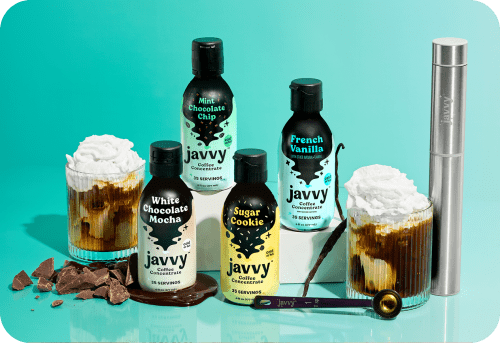
Javvy’s cold brew concentrates check every box. They’re perfect over ice, with hot water, or swirled into plant-based milk. Plus, with goMCT® and prebiotics, each cup supports focus and gut health while delivering that signature smooth taste.
Here’s what to look for:
- Arabica beans for smooth flavor
- Low-acid profile
- No added sugar
- Works hot and cold
- Functional add-ins like prebiotics
Does Cold Brew Concentrate Blend Well with Plant-Based Milk?
High-quality cold brew concentrate, especially one with a low-acid profile, blends well with plant-based milks. It mixes evenly, doesn’t curdle, and keeps your coffee smooth from first sip to last.
Some of the best pairings include:
- Oat milk: Naturally sweet, creamy, and frothy.
- Almond milk: Light and nutty, perfect for low-calorie blends.
- Coconut milk: Rich and tropical with a velvety mouthfeel.
- Soy milk: Balanced, protein-rich, and subtly nutty.
Our cold brew concentrate makes it easy to experiment. Try a Brown Sugar Oat Milk Latte or a Caramel Brûlée Cold Brew. You’ll see how seamlessly it plays with your favorite dairy-free options.
The Bottom Line
If you love smooth, mellow coffee that’s easy on your stomach and high in caffeine, cold brew is your best bet. If you prefer something fast, classic, and budget-friendly, iced coffee will do the trick.
With Javvy Coffee, you don’t have to pick between convenience and quality. Our cold brew concentrates deliver premium taste, clean ingredients, and versatility that fits your lifestyle, all backed by our 100% Happiness Guarantee.
Shop the Products in This Article

Coffee Concentrate
100% Real Coffee