





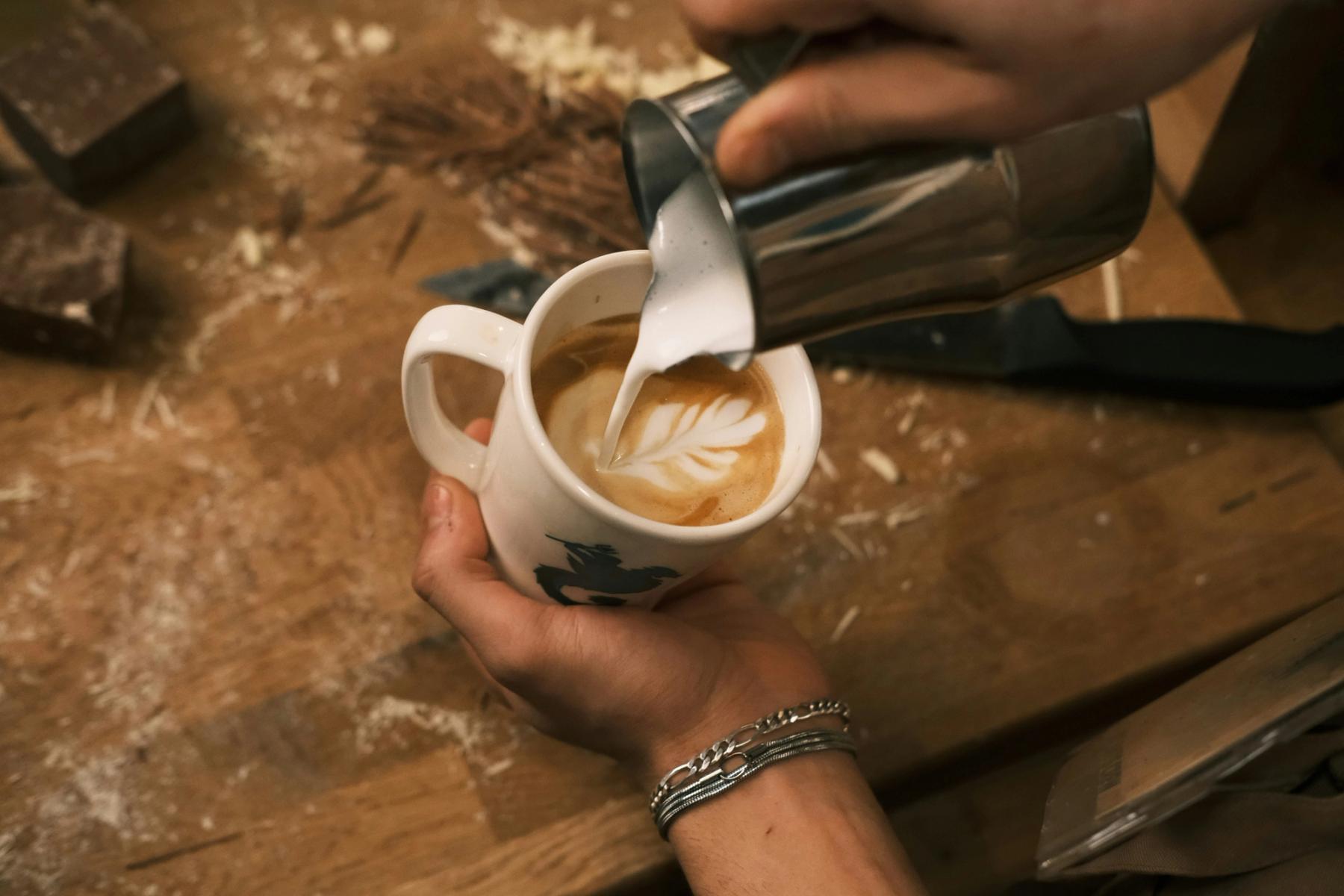
What Frothing Milk Actually Does
Frothing introduces air into milk, creating tiny bubbles that give drinks a creamy, velvety texture.
That texture changes how coffee feels on your palate. Foam softens bitterness and distributes flavor more evenly. It’s one reason milk-based drinks feel smoother than straight espresso or black coffee, especially when compared to something like Americanos and black coffee.
Foam isn’t decoration. It changes the experience.
Best Milk for Frothing
Whole milk froths most easily because its fat and protein help stabilize bubbles.
2% milk works well too. Non-dairy milks can froth, but results depend heavily on the formulation. “Barista blend” options usually perform better.
If you enjoy smoother, blended formats, milk texture plays a similar role in drinks like frozen coffee, where structure and consistency matter just as much as flavor.
5 Ways to Froth Milk Without a Machine
You don’t need a steam wand to create good foam.
1. Handheld Frother
Heat milk first. Insert the frother just below the surface and move gently up and down until microfoam forms.
2. French Press
Add warm milk to a French press and pump the plunger quickly to incorporate air.
3. Jar Method
Pour warm milk into a jar, seal it, and shake vigorously for 15–20 seconds. Remove the lid and microwave briefly to stabilize the foam.
4. Whisk
Heat milk and whisk briskly by hand until foam builds.
5. Blender
Blend warm milk for a few seconds until frothy.
All five methods work. The key is small bubbles, not large airy ones.
How Hot Should Milk Be?
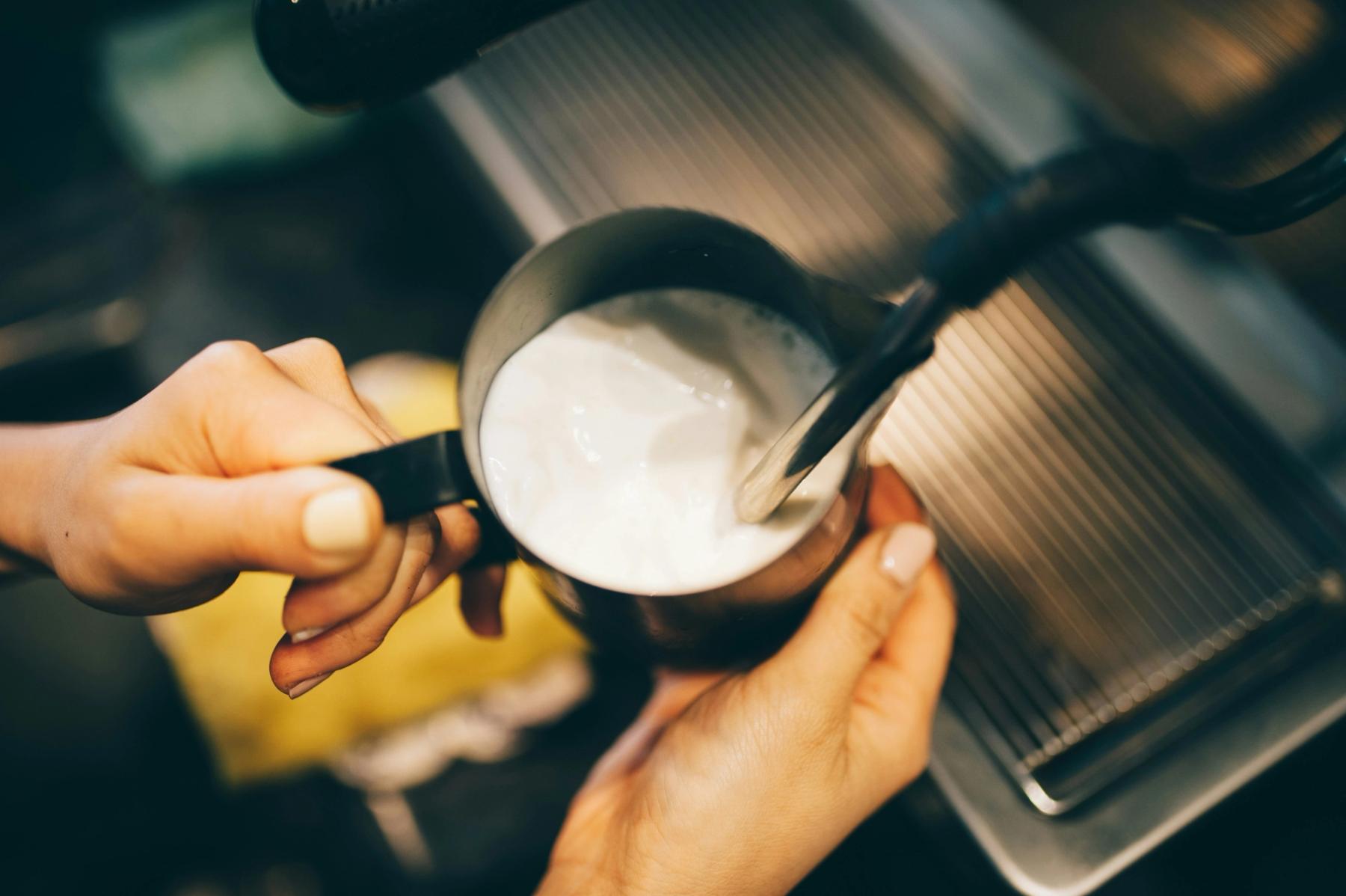
Milk should be warm but not boiling.
Aim for about 140-150°F. Overheating breaks down proteins and reduces natural sweetness.
When heated properly, milk tastes slightly sweeter and blends more smoothly with coffee.
Building a Latte at Home
Once your milk is frothed, pour it slowly over your coffee base.
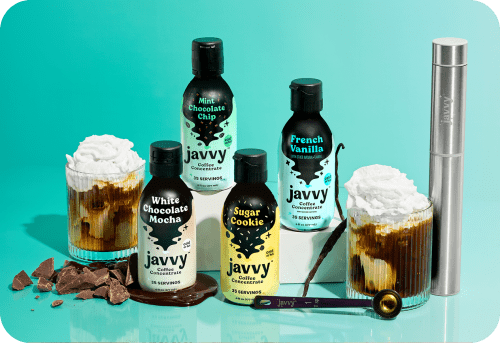
A strong base keeps the drink balanced after milk is added. Using Coffee Concentrate makes it easier to control strength without an espresso machine.
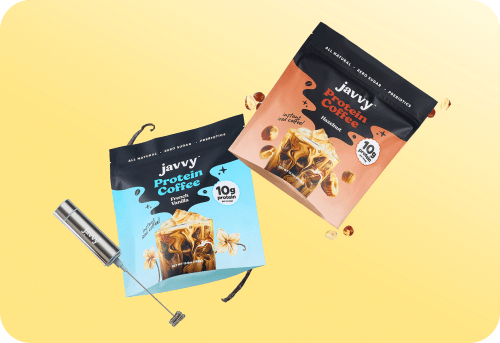
If you prefer a cold option, Protein Coffee is designed for cold prep and can be topped with cold foam for contrast.
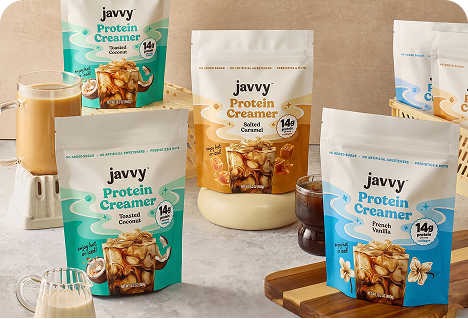
For a creamier texture upgrade, Protein Creamer can be mixed into coffee before adding frothed milk.
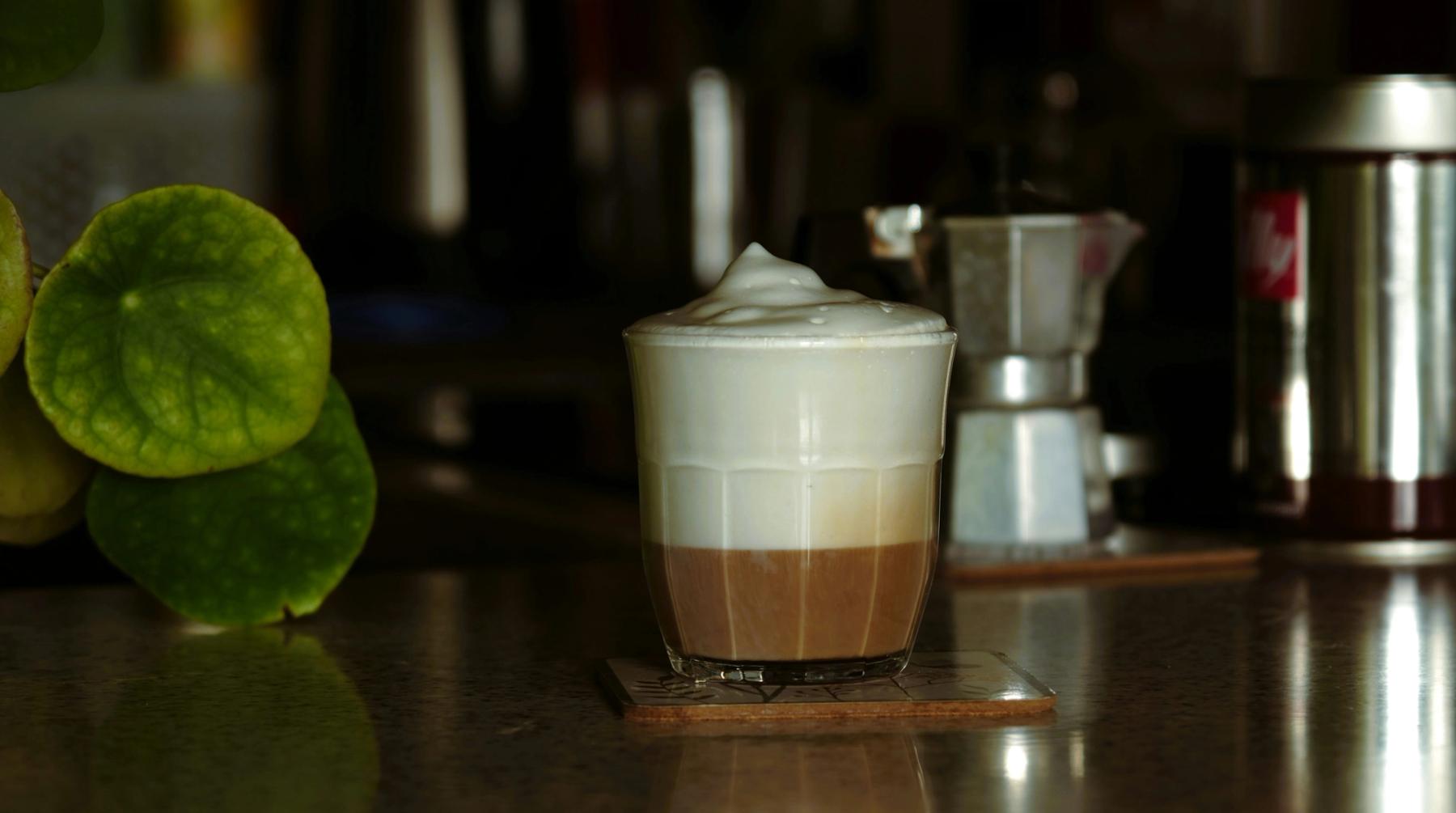
Common Frothing Mistakes
- Using milk that’s too cold
- Overheating milk
- Creating large visible bubbles instead of microfoam
- Pouring too aggressively and collapsing foam
- Skipping the step of tapping and swirling to break large bubbles
Small adjustments dramatically improve texture.
Final Thoughts
Frothing milk at home is about technique, not tools.
Once you understand how to create fine, stable bubbles, your lattes become smoother, creamier, and more balanced, even without a machine.
Texture changes everything.
Shop the Products in This Article

Collagen Creamer
14g Protein per Scoop